
01 / PLANNING
Start with a shared understanding.
We clarify your goals, users, existing systems and constraints before defining the scope. An agreed plan gives your team a clear view of priorities, dependencies and expected deliverables.
How we work · Our delivery process
Our software development process connects requirements, design, engineering and testing in a structured delivery plan. We tailor the activities to your project, with agreed milestones, stakeholder reviews and a plan for launch and ongoing support.







A shared plan, timely feedback and clear responsibilities help teams move from requirements to a reviewed release.
We clarify your goals, users, existing systems and constraints before defining the scope. An agreed plan gives your team a clear view of priorities, dependencies and expected deliverables.
Design reviews and delivery checkpoints give your stakeholders opportunities to provide feedback. We discuss changes and their impact on scope, budget and timing before moving forward.
Each stage has defined activities, deliverables and review expectations. We coordinate the work across design, development and testing, with launch and support requirements included in the plan.
Four connected phases show how planning, implementation and ongoing support fit together.
Understand your business requirements, define the scope and map user journeys, architecture and delivery priorities.
Review interface designs and prepare the copy, assets and information needed to make the product usable.
Build the agreed features and integrations, then validate functionality, usability and performance against the requirements.
Prepare the production release, coordinate handover and maintain the application through an agreed support scope.
Each stage has a defined purpose. Activities may overlap or be revisited as requirements and feedback develop.
We discuss your goals, users, current workflows and systems. This stage establishes the business requirements, constraints and questions that need to be resolved before planning.
We organize requirements into an agreed scope, map user journeys and outline the technical approach. Milestones, dependencies and responsibilities help establish a practical delivery plan.
We develop wireframes, prototypes and interface designs for stakeholder review. Feedback helps refine the user experience and confirm key interactions before implementation.
We prepare and organize the copy, images and other information the application needs. Content responsibilities and review points are coordinated with your team.
We implement the agreed features, business logic and system integrations. Development follows the technical plan, with progress reviewed against project milestones.
We validate functionality, usability and relevant performance and security requirements. Following issue resolution and agreed acceptance checks, we coordinate deployment and handover.
After launch, we support the application through agreed maintenance activities, issue resolution and updates. Enhancements are prioritized around user feedback and business needs.
A useful estimate starts with your systems, data and goals. We assess scope, integrations and testing needs so you can weigh the expected value against development effort, operating costs and delivery risks.
The number and complexity of integrations affect development effort. API availability, legacy systems and data formats all influence the estimate.
Workflows involving payments, approvals or sensitive records require appropriate access controls, audit trails and review processes. These requirements shape the architecture and scope.
Data quality, consistency and accessibility affect implementation. Cleaning records, organizing documents and reconciling systems may be part of the project.
Testing requirements depend on the application and its operating environment. Regulated or business-critical workflows may require additional validation and ongoing monitoring.
Choose the approach that fits the problem. We assess whether conventional automation, custom software or AI is appropriate for your workflow, considering implementation effort, operating costs and maintenance.
What drives AI project cost →We select design, development and deployment tools based on your application, existing systems and long-term maintenance needs.
Our design toolkit includes Figma, Adobe XD, Photoshop.
Available technologies include HTML5, CSS3, JavaScript, React, Redux, Angular.
Available technologies include Node.js, Django, Flask, MongoDB, MySQL, PostgreSQL.
Our deployment toolkit includes Docker, Kubernetes, Jenkins, GitHub Actions, AWS, Azure.
Delivery checkpoints connect the agreed scope to stakeholder feedback, acceptance checks and operational readiness.
The delivery framework provides structure, while the activities and technical checks reflect the type of work involved.
A web application needs browser and integration testing. A cloud engagement needs deployment and operational planning. An AI integration needs data preparation and output evaluation. We define the relevant activities before implementation begins.
Explore the practical considerations that shape planning, implementation and handover across our services.
Plan user journeys and integrations, review interfaces and test the application across relevant browsers.
Define platform requirements, validate app flows and prepare testing and distribution for iOS and Android.
Explore user needs, develop wireframes and prototypes, and refine designs through stakeholder feedback.
Assess infrastructure needs, automate deployments and plan monitoring, access controls and operational handover.
Map current workflows, prioritize improvements and plan integrations or modernization in manageable phases.
Agree the assessment scope, identify risks and document remediation priorities and applicable requirements.
Design cloud applications around integration needs, operating costs, security and expected usage.
Define issue reporting, maintenance activities and improvement priorities within an agreed support scope.
Understand project stages, collaboration, timelines and post-launch support.
Our process covers requirements discovery, planning, interface design, content preparation, development, testing and launch, and maintenance. Activities and deliverables are tailored to the project scope.
We focus the scope on essential features while planning design, development, testing and launch readiness. The depth of each activity depends on the project, and some activities may run alongside one another.
Your team helps confirm requirements, review designs and evaluate completed work at agreed checkpoints. We discuss feedback, outstanding decisions and proposed scope changes throughout delivery.
We assess the feature scope, integrations, available content and data, testing requirements and external dependencies. The delivery plan sets out milestones, responsibilities and assumptions, with changes discussed as the project develops.
Post-launch work can include maintenance, issue resolution, security updates and enhancements. Support coverage, responsibilities and response expectations are agreed according to your application and engagement.
Tell us where your project stands and what you want to achieve. We will help identify the requirements, review points and delivery approach for your next release.
Tell us what you want to achieve, what exists today and any important constraints.
We follow up to clarify features, dependencies and stakeholder expectations.
Discuss a discovery session, scoped proposal or focused first release that fits your priorities.
Cabin No. 10, Second Floor, A 24/9, Mohan Cooperative, Badarpur, New Delhi 110044
Share your goals and project stage. We aim to follow up within one business day.
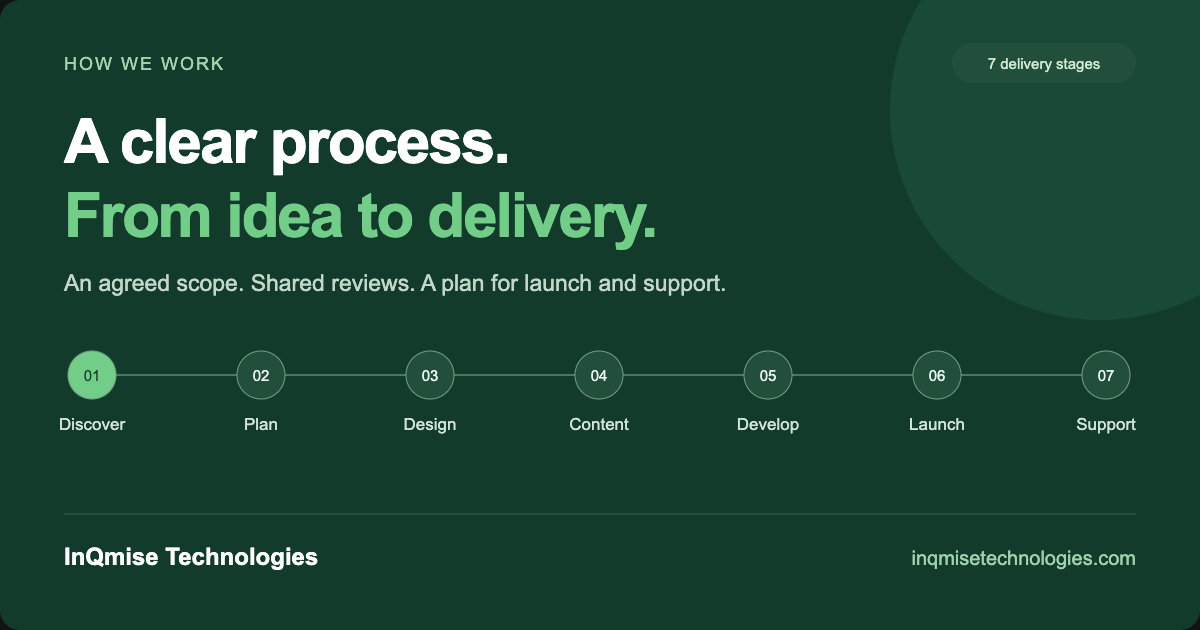
InQmise’s software development process: seven stages from requirements discovery to launch and ongoing support.
Download this card